
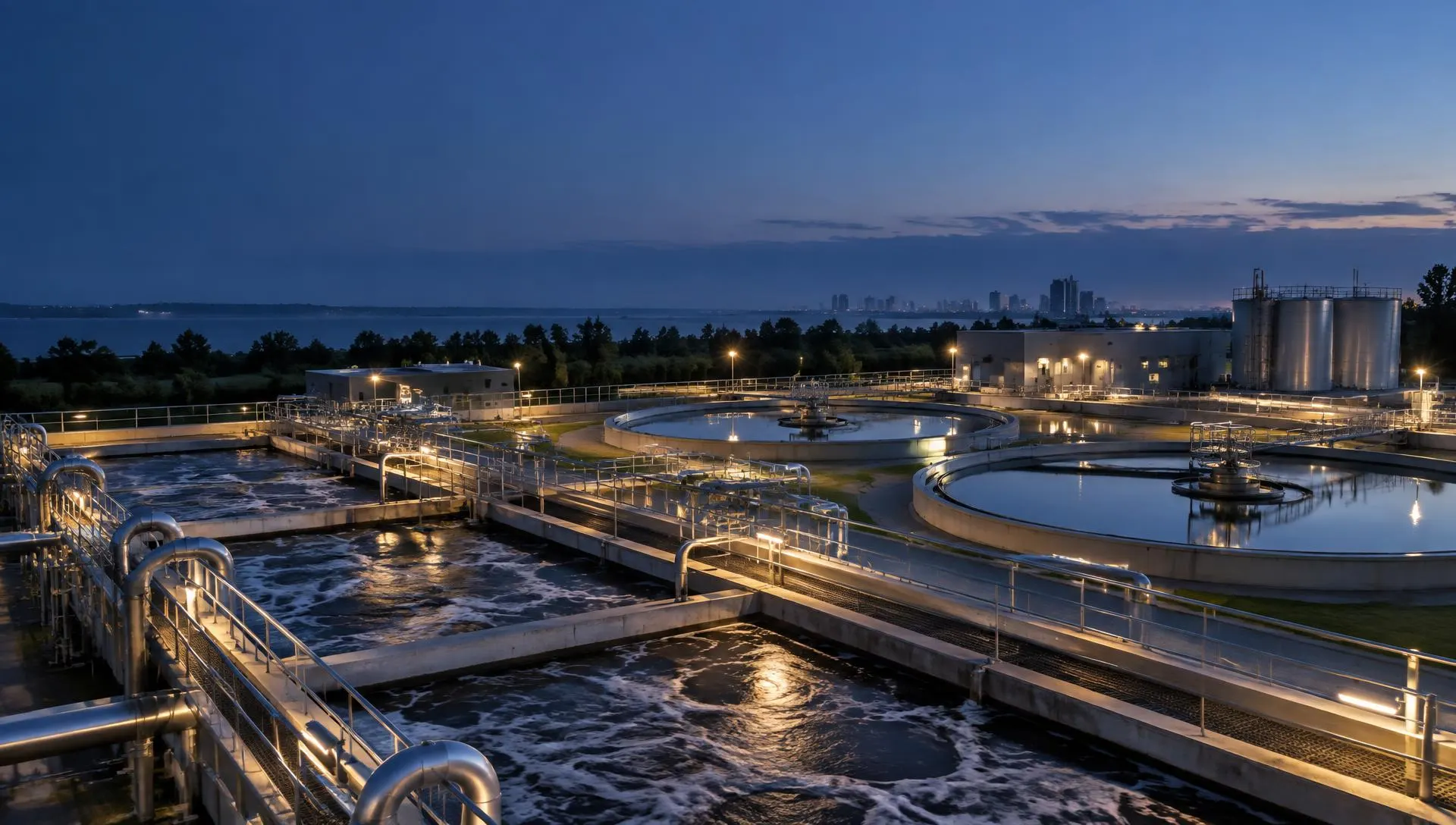
Wastewater operations intelligence
Earlier visibility into nutrient risk.
Better-informed operator response.
Waste Water Care is building explainable nutrient early-warning and operator decision-support software for biological wastewater-treatment operations.
Bring plant context, data quality, risk visibility, operator workflow, evidence-grounded assistance and reporting into one coherent workspace.
Private demonstration with synthetic data and saved observations. See what this release covers
Influent flow
548.6 m³/h
Dissolved O₂
1.5 mg/L
Temperature
13.4 °C
NH₄-N · +1h / +2h / +4h
Curated Demo Output
Operational context
Process conditions change faster than isolated measurements can explain.
Wastewater operations combine changing hydraulic conditions, biological conditions, environmental variables and imperfect sensor data.
The product is designed to organize those signals into a clearer operator investigation workflow.
Workflow
From plant data to an auditable response.
01
Plant Context
02
Data Quality
03
Nutrient Risk
04
Investigate
05
Respond
06
Document
Product
One operator workflow. Multiple layers of evidence.
Nutrient Risk View
Short-horizon NH₄-N views with confidence and context.
+1h
3.6
+2h
3.9
+4h
4.6
Data Quality
Deterministic checks surface gaps, flatlines and invalid values first.
- Missing timestampsPass
- Duplicate recordsPass
- Missing valuesReview
- Invalid rangesPass
- Sudden jumpsPass
- FlatlineFail
Plant & Data Workspace
One bounded plant profile anchors every view.
- Plant
- WWC Demo Plant A
- Treatment
- Activated Sludge / BNR
- Units
- 2 aeration basins
- Interval
- 15 min
Alert & Action Workflow
Acknowledge, assign, investigate, record, close.
- 1Open
- 2Acknowledged
- 3Assigned
- 4Investigating09:12
- 5Action Recorded
- 6Closed
Evidence Copilot
Answers from approved sources, with citations.
Why is ammonia risk increasing?
The strongest illustrative drivers are dissolved oxygen and influent flow, based on synthetic demo evidence.
Evidence Reporting
Editable incident and shift reports with human approval.
- Incident
- WWC-DEMO-024
- Observations
- DO decline in Basin 2; flow rising
- Recorded action
- Blower B2 inspection
- Status
- Reviewed
Trust & Model Transparency
Data card, model card, source register and limitations.
- Validated model
- None
- Champion model
- Not selected
- Data source
- Synthetic
- Plant connection
- Not connected
Influent flow
956.1 m³/h
Dissolved O₂
1.8 mg/L
Temperature
14.6 °C
NH₄-N · +1h / +2h / +4h
Curated Demo OutputInteractive demo
Explore the workflow yourself.
Four sample scenarios drive every screen consistently — data, quality checks, risk, alerts and reports.
Normal Operation
Stable flow and oxygen; NH₄-N remains low and steady.
Storm / High Flow
Rainfall drives influent flow up; hydraulic load shortens contact time.
Aeration Degradation
Blower output and DO decline; DO probe shows a flatline segment.
Ammonia Risk
Low DO, rising load and cooler temperature push NH₄-N upward.
Use cases
Designed around real operator investigation patterns.
Sample scenarios that illustrate the workflow — not customer case studies.
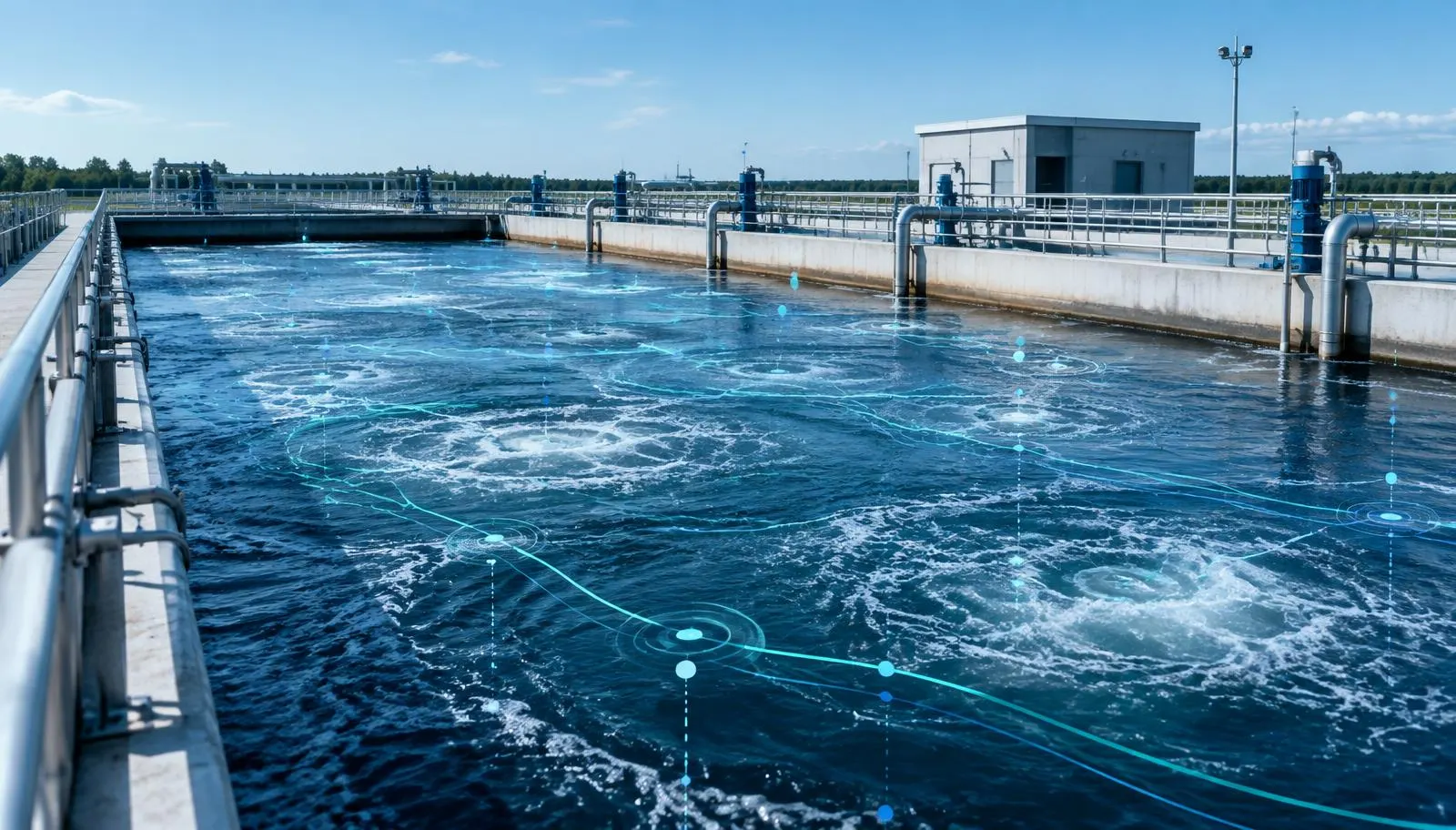
Ammonia-Risk Event
NH₄-N trajectory rises as oxygen falls and load increases.
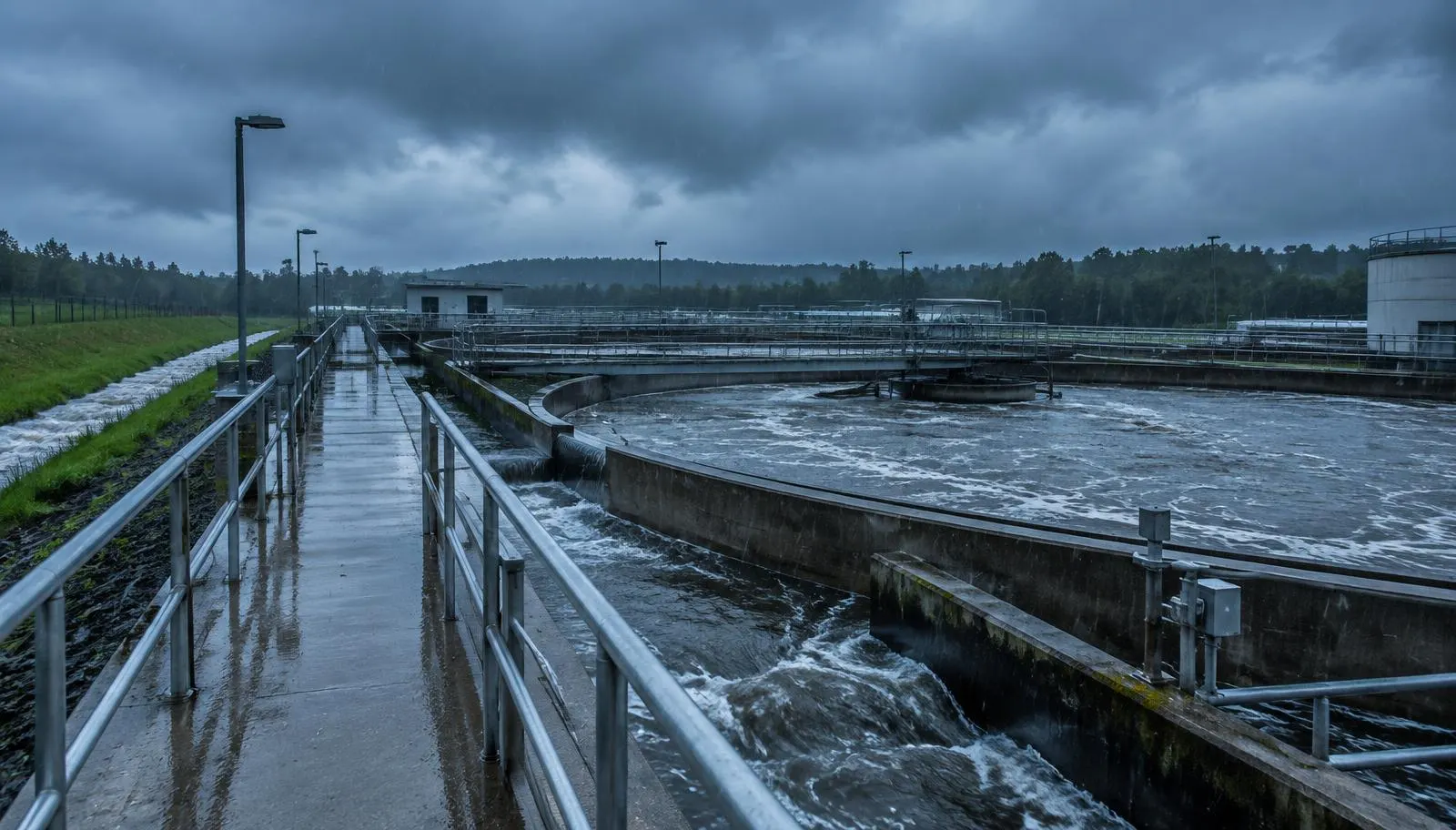
Storm / High Flow
Rainfall and influent flow change the hydraulic context.

Aeration Degradation
Blower output and DO decline; a probe flatlines.

Data-Quality Incident
Gaps and stale signals reduce confidence instead of hiding it.
Human in the loop
Decision support, not autonomous control.
Explain
Show what the signals indicate and how much the view should be trusted.
Investigate
Put drivers, data quality and evidence in front of the operator.
Document
Record what was reviewed and what the operator decided.
- L1
Sample / future plant data
- L2
Schema & unit mapping
- L3
Data quality checks
- L4
Forecasting / risk layer
- L5
Explanation & confidence
- L6
Operator workflow
- L7
Evidence & reporting
- No PLC writes
- No chemical dosing
- No blower actuation
- No control-system commands
No equipment control, setpoint changes, PLC/SCADA write-back or autonomous process action is part of the current MVP scope.
Technology
Built for technical scrutiny, not AI theatre.
Data quality
Rule-based checks with explicit thresholds.
Evidence
Sources and audit events behind every output.
Human review
Operators approve, AI drafts are labelled.
Model transparency
Model card states exactly what exists.
Progress
From concept to an evidence-safe product direction.
2022
Historical concept
Original wastewater nutrient-prediction concept and business plan.
March 2024
U.S. provisional filing
Provisional application filed relating to Waste Water Care software.
July 2025
Second U.S. provisional filing
Further provisional application filed.
2026
Product modernization
Evidence-safe operator decision-support direction and interactive MVP frontend.
Next
Benchmark & pilot validation
Real-data benchmark and pilot validation with a partner facility.
Insights
Technical notes from the product team.

September 30, 2026 · 5 min
How to Build a Synthetic Wastewater Demo Without Confusing It With Plant Validation

September 23, 2026 · 5 min
Why Human-in-the-Loop Design Matters in Wastewater Decision Support

September 16, 2026 · 5 min
From LSTM to Benchmark-Led Model Selection in Wastewater Forecasting
Founding Team
The people behind Waste Water Care.
Hamid Farhadfar
Founding Team
Historical background: Textile engineering; manufacturing and management.
Abbas Simkhah
Founding Team
Historical background: Chemical engineering; operations and power-production experience.
Davood Talebimoghadam
Founding Team
Historical background: Public administration and administrative management; finance, administration and operations.
Mehrangiz Mojaverisammak
Founding Team
Historical background: Computer science and computer engineering; AI study; networks, web and SEO.